
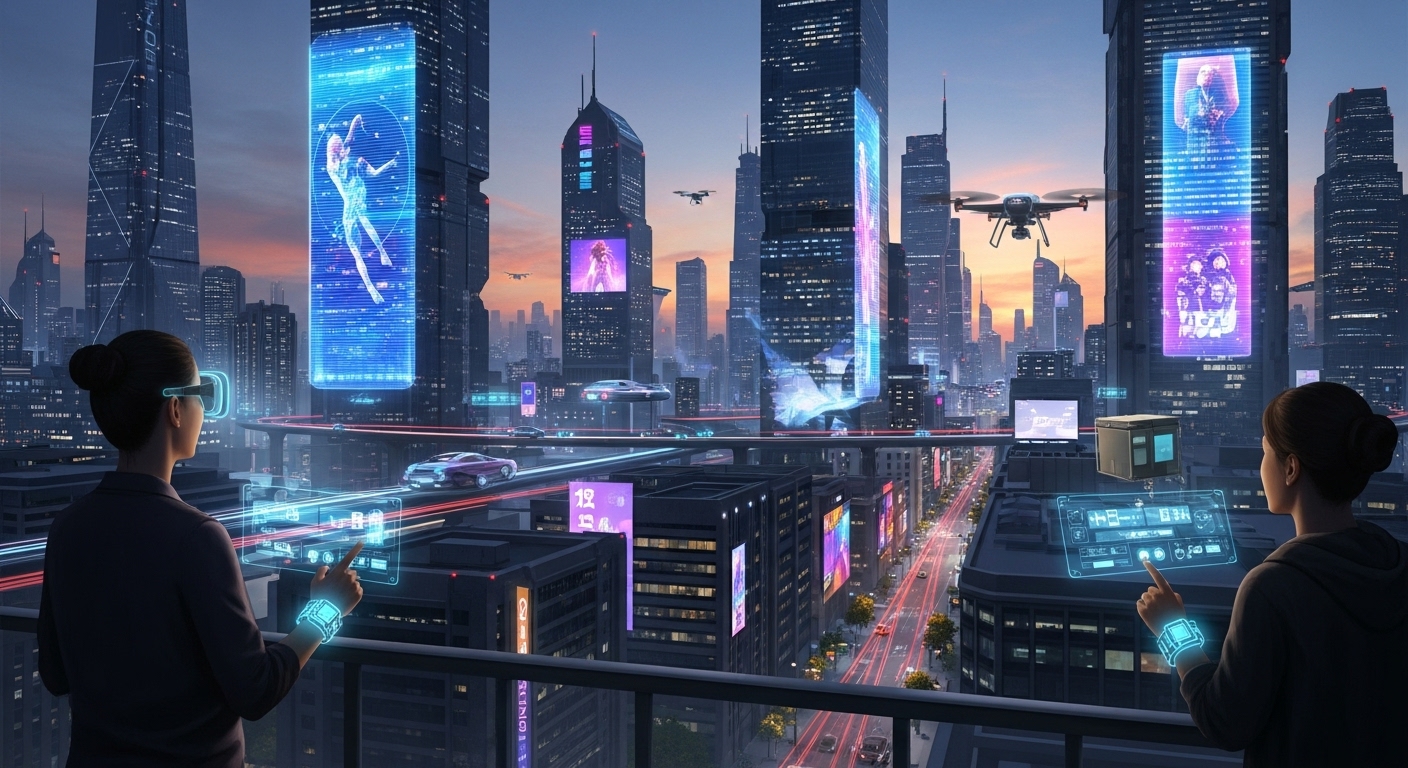
Introduction: A World Transformed by Technology
In just a few decades, technology has transformed our lives in ways that were once unimaginable. The rapid advancement of tech innovations has reshaped industries, altered the way we communicate, and even changed our daily routines. From the dawn of the internet to the rise of artificial intelligence, blockchain, and quantum computing, technology is no longer just a tool—it’s an integral part of our existence.
In this blog, we will explore how cutting-edge technologies are shaping our present and future. From the way we work and learn to how we experience entertainment and healthcare, we’ll dive into the most significant technological innovations and the profound impact they have on society. While we embrace the conveniences and possibilities these innovations bring, we’ll also reflect on the challenges they present and how we can navigate this ever-evolving landscape.
The Power of Artificial Intelligence: Machines that Learn
Among the most transformative technologies of the modern age is artificial intelligence (AI). Once a concept relegated to science fiction, AI has rapidly become an integral part of everyday life. AI refers to machines designed to think and act like humans, capable of learning from data, making decisions, and performing tasks that would traditionally require human intelligence.
From virtual assistants like Siri and Alexa to complex machine learning algorithms that power self-driving cars, AI is redefining industries. In healthcare, AI is used to analyze medical images and predict patient outcomes, improving the speed and accuracy of diagnoses. In finance, algorithms can detect fraudulent activity, optimize investments, and predict market trends with a level of sophistication that was once thought impossible.
One of the most exciting applications of AI is in the field of natural language processing (NLP), which enables computers to understand and respond to human language. This technology powers chatbots, language translation apps, and even voice assistants, making interactions between humans and machines more intuitive and seamless. As AI continues to evolve, its potential applications are limitless, ranging from personalized learning experiences to advanced robotics and automation.
However, the rise of AI also raises important ethical questions. As machines become more capable, concerns about job displacement, privacy, and security have come to the forefront. The future of work will likely involve significant shifts in labor markets, and society will need to find ways to adapt to these changes. Moreover, AI decision-making processes must be transparent and accountable to ensure they are used fairly and responsibly.
Blockchain Technology: Decentralizing the Future
When most people think of blockchain, they think of cryptocurrencies like Bitcoin or Ethereum, but blockchain technology is far more than just the backbone of digital currencies. At its core, blockchain is a decentralized, secure, and transparent ledger system that can be used to track transactions and data across a distributed network. This technology has the potential to revolutionize industries by eliminating the need for intermediaries, reducing fraud, and increasing efficiency.
In the financial sector, blockchain allows for faster, more secure transactions by cutting out the middleman. Traditional banking systems require multiple layers of verification and processing, which can lead to delays and higher costs. Blockchain streamlines these processes, allowing for direct transactions between parties, with enhanced security and lower fees. This technology has the potential to disrupt global financial systems, especially in areas like cross-border payments, remittances, and lending.
Beyond finance, blockchain is being used in a variety of other sectors. In supply chain management, blockchain can track the movement of goods in real-time, ensuring transparency and accountability at every step of the process. This can help prevent fraud, reduce waste, and improve efficiency. In healthcare, blockchain is being explored as a means of securely storing patient records, allowing for more streamlined access to medical histories and improving patient care.
One of the most promising applications of blockchain is the concept of smart contracts, which are self-executing contracts with terms written directly into code. These contracts automatically execute when certain conditions are met, eliminating the need for intermediaries such as lawyers or notaries. Smart contracts could significantly streamline business processes and reduce costs, especially in industries like real estate, insurance, and legal services.
Despite its potential, blockchain technology is not without its challenges. Issues such as scalability, energy consumption, and regulatory uncertainty need to be addressed before blockchain can reach its full potential. However, with ongoing advancements and growing interest, blockchain is poised to revolutionize the way we conduct business and interact with one another.
Quantum Computing: Unlocking New Realms of Possibility
Quantum computing is one of the most exciting frontiers in technology today. Unlike classical computers, which use bits to represent information in binary form (0 or 1), quantum computers use quantum bits or qubits. Qubits have the ability to exist in multiple states simultaneously, thanks to the principles of quantum mechanics. This unique property allows quantum computers to process vast amounts of data and perform complex calculations at speeds far beyond the capabilities of traditional computers.
The potential applications of quantum computing are vast. In the field of cryptography, quantum computers could break through the encryption methods currently used to protect sensitive data, creating a need for new, more secure methods of data protection. Quantum computers could also revolutionize fields like material science, pharmaceuticals, and artificial intelligence by enabling simulations and calculations that were previously impossible to perform.
For example, quantum computing could accelerate drug discovery by simulating the interactions of molecules with unprecedented precision. In the realm of artificial intelligence, quantum computing could speed up machine learning algorithms, allowing AI systems to learn and adapt more quickly. The development of quantum algorithms could also improve supply chain optimization, financial modeling, and even climate modeling.
Despite its promise, quantum computing is still in its early stages. Building a functional quantum computer requires highly controlled environments, including extreme temperatures and electromagnetic isolation. Moreover, qubits are highly sensitive to noise and interference, making it difficult to maintain their state long enough to perform meaningful computations. However, with significant investments from companies like Google, IBM, and Microsoft, breakthroughs are being made, and the future of quantum computing looks incredibly promising.
Biotechnology: The Intersection of Technology and Life
Biotechnology is one of the most rapidly advancing fields today, merging technology with biology to create groundbreaking innovations that could change the future of medicine, agriculture, and even human biology itself. One of the most significant recent developments in biotechnology is CRISPR gene editing technology. CRISPR allows scientists to precisely alter DNA within living organisms, opening up the possibility of curing genetic diseases, improving crops, and even extending human lifespan.
In healthcare, gene editing could one day eliminate inherited diseases such as cystic fibrosis, sickle cell anemia, and Huntington’s disease. By modifying the genes responsible for these conditions, scientists could prevent them from being passed down to future generations. Furthermore, gene editing has the potential to personalize medicine, allowing doctors to tailor treatments based on a patient’s unique genetic profile.
Beyond human health, biotechnology is revolutionizing agriculture. Advances in genetic engineering allow scientists to create crops that are more resistant to pests, diseases, and environmental stresses, potentially increasing food security in regions facing challenges like drought or crop failure. Biotechnology is also being used to develop alternative proteins and lab-grown meats, which could reduce the environmental impact of traditional animal farming.
However, as with any new technology, gene editing and biotechnology raise important ethical questions. Should we alter the human genome, and if so, to what extent? What are the long-term implications of genetically modified organisms (GMOs) in the environment? As biotechnology continues to advance, these ethical considerations will become more pressing, and it is crucial that society addresses them responsibly.
The Future of Work: Automation and the Gig Economy
As technology continues to evolve, so too does the nature of work. Automation, artificial intelligence, and robotics are reshaping industries, from manufacturing and logistics to customer service and healthcare. Tasks that were once performed by humans are now being taken over by machines, and many jobs are being replaced by robots or automated systems.
While automation has the potential to increase efficiency and reduce costs, it also poses a significant challenge to the labor market. Many jobs, particularly in sectors like retail, transportation, and manufacturing, are at risk of being automated. This raises important questions about job displacement and the future of employment. How can workers be retrained for the jobs of the future? What steps can be taken to ensure that the benefits of automation are distributed equitably?
At the same time, new technologies are also giving rise to the gig economy, where workers can find temporary, flexible jobs through platforms like Uber, Airbnb, and TaskRabbit. The gig economy offers workers greater freedom and control over their schedules, but it also raises concerns about job security, benefits, and worker rights.
The future of work will likely involve a combination of automation and human labor, with technology complementing human skills rather than replacing them entirely. As automation and artificial intelligence continue to evolve, it will be important for society to ensure that workers are supported and that the transition to a more automated world is managed fairly.
Conclusion: Embracing the Technological Future
Technology is advancing at an unprecedented rate, and its impact on our lives is only going to grow. From artificial intelligence and blockchain to quantum computing and biotechnology, the innovations of today are laying the groundwork for a future that is both exciting and challenging. While these technologies hold tremendous promise, they also raise important questions about ethics, privacy, and the future of work.
As we navigate this rapidly changing landscape, it is essential that we approach technological advancements with caution, responsibility, and foresight. By fostering innovation that benefits society as a whole, investing in education and workforce development, and ensuring that ethical considerations are at the forefront of technological progress, we can create a future where technology enhances our lives and helps solve some of the world’s most pressing challenges.