Introduction: The Unstoppable Pace of Technological Change
Technology is no longer just a tool; it has become a force that drives industries, reshapes societies, and impacts nearly every facet of our daily lives. The 21st century has witnessed unprecedented advancements that have fundamentally altered how we communicate, work, and live. From artificial intelligence (AI) to blockchain, from 5G to quantum computing, the landscape of technology is constantly evolving.
The question that many are asking now is: what’s next? As we look toward the future, it’s clear that technology will continue to play a key role in shaping the next phase of human progress. But how will these innovations influence the future of work, education, entertainment, healthcare, and much more?
In this blog post, we will explore the top technological trends and innovations that are poised to transform our world in the coming years. These emerging technologies are not just pushing the boundaries of what is possible—they are creating new frontiers altogether.
The Role of Artificial Intelligence: Intelligence Beyond Human Capacity
Artificial Intelligence (AI) has gone from being a futuristic concept to a practical tool that is deeply integrated into modern life. From voice assistants like Siri and Alexa to advanced machine learning algorithms that power recommendations on platforms like Netflix and Amazon, AI is everywhere.
One of the most significant ways AI is transforming industries is through automation. In sectors like manufacturing, retail, and logistics, AI is enabling machines to perform tasks that were previously handled by humans. This not only enhances efficiency but also reduces the margin for error, leading to more reliable outcomes.
In healthcare, AI is making a significant impact by improving diagnostic accuracy, predicting disease outbreaks, and assisting in the development of personalized treatment plans. AI-driven algorithms can now analyze medical images and detect signs of conditions such as cancer and heart disease with greater precision than human doctors.
Despite these advancements, AI still faces challenges. Questions around ethics, privacy, and job displacement are central to the conversation about its future. As AI continues to evolve, it’s essential to ensure that its benefits are harnessed responsibly and equitably.
5G Technology: Redefining Connectivity
As the world becomes more interconnected, the need for faster and more reliable internet speeds has never been greater. Enter 5G, the fifth generation of wireless technology, which promises to revolutionize how we connect to the internet and communicate with one another.
With 5G, users will experience download speeds that are exponentially faster than current 4G networks, reducing latency and enabling real-time communication. This is a game-changer for industries such as telecommunications, gaming, and streaming, as 5G will make high-definition content accessible on demand, without buffering or lag.
But the impact of 5G goes far beyond entertainment. It will be the backbone of the Internet of Things (IoT), allowing billions of connected devices to communicate with each other seamlessly. Smart homes, autonomous vehicles, and industrial automation will all benefit from the low-latency and high-speed data transmission capabilities of 5G.
As the rollout of 5G continues, its potential to transform sectors like healthcare, education, and transportation will only increase. Telemedicine, for example, could reach new heights with 5G, enabling doctors to perform remote surgeries or provide real-time consultations to patients across the globe.
The Rise of Quantum Computing: Unlocking Unimaginable Processing Power
Quantum computing represents a whole new paradigm in computing power. Unlike classical computers that process information in binary code (0s and 1s), quantum computers use quantum bits or qubits, which can represent both 0 and 1 simultaneously, thanks to the principles of quantum mechanics. This allows quantum computers to perform certain types of calculations at speeds unimaginable for traditional computers.
The implications of quantum computing are vast. In fields like cryptography, quantum computers have the potential to crack codes and encryption systems that would take current computers millennia to break. In materials science, quantum computing could accelerate the discovery of new drugs, optimize supply chains, and help scientists develop materials with unprecedented properties.
However, quantum computing is still in its infancy. Researchers and engineers are working tirelessly to overcome challenges related to qubit stability, error rates, and scalability. While quantum computers are not yet ready for mainstream use, the progress made thus far suggests that quantum computing could play a pivotal role in solving some of the world’s most complex problems in the future.
Blockchain: A Revolution Beyond Cryptocurrency
Blockchain technology, which underpins cryptocurrencies like Bitcoin, has the potential to revolutionize industries far beyond finance. At its core, blockchain is a decentralized and distributed ledger that records transactions across multiple computers in a way that is transparent, secure, and tamper-proof.
Blockchain’s primary benefit is its ability to create trust without the need for a central authority. This makes it ideal for applications in fields such as supply chain management, healthcare, and voting systems. For instance, in supply chain management, blockchain can track the provenance of goods, ensuring that products are ethically sourced and not subject to fraud or counterfeiting.
In healthcare, blockchain can securely store and share patient data, ensuring privacy while allowing healthcare providers to access accurate, up-to-date information. This could streamline patient care, improve diagnosis accuracy, and reduce medical errors.
Blockchain is also gaining traction in the financial sector, where it can enable faster and cheaper cross-border payments, reduce fraud, and increase transparency in financial transactions. While blockchain is still relatively new, its potential to disrupt industries and create new business models is undeniable.
The Internet of Things (IoT): A World of Smarter Devices
The Internet of Things (IoT) refers to the growing network of connected devices that can communicate and exchange data over the internet. From smart thermostats and wearables to autonomous vehicles and connected factories, IoT is rapidly changing the way we interact with the world around us.
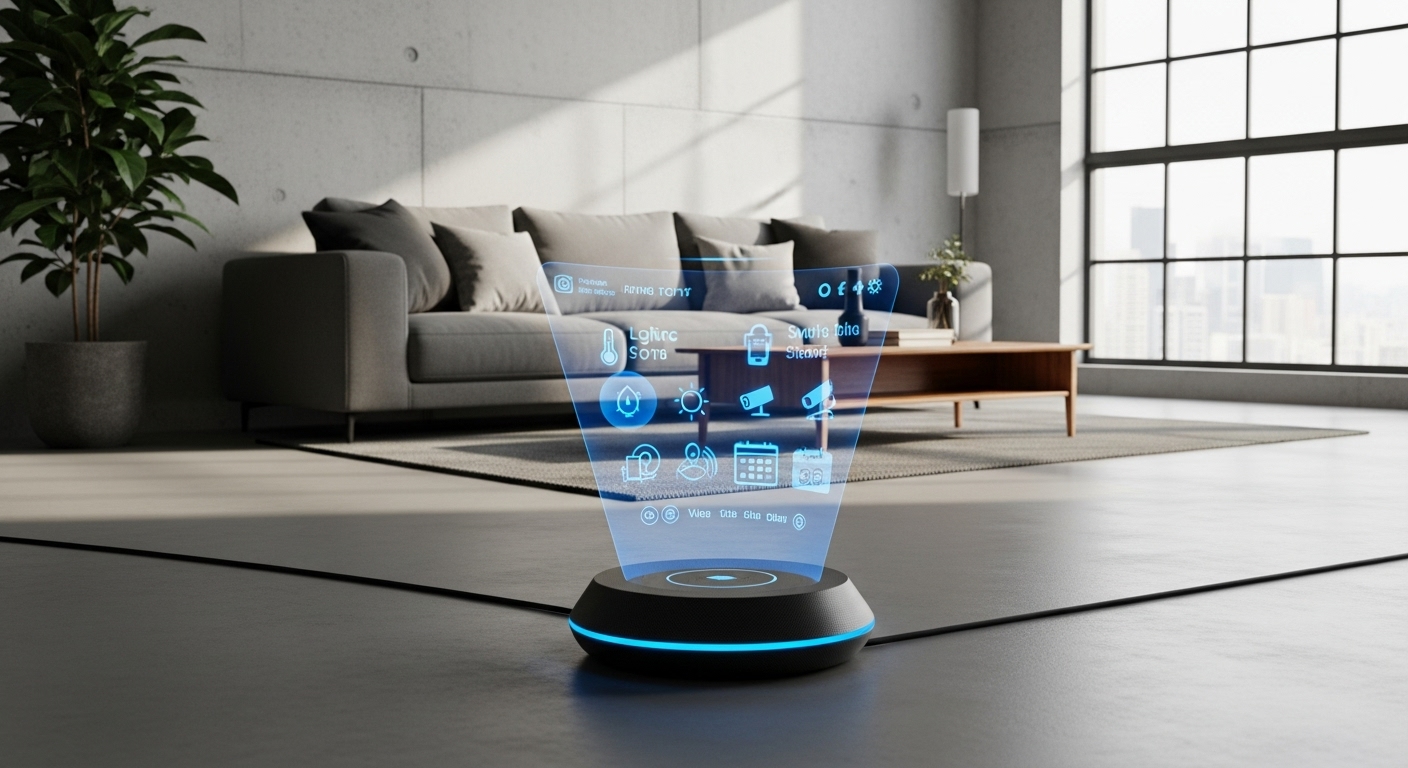
IoT is creating smarter homes, where devices can learn from your habits and preferences to optimize energy use, enhance security, and improve convenience. In industries such as agriculture, IoT sensors are helping farmers monitor crop health and soil conditions in real-time, enabling more efficient and sustainable farming practices.
In healthcare, IoT-enabled devices like smartwatches and fitness trackers are empowering individuals to take charge of their health by monitoring vital signs and activity levels. For doctors, these devices provide valuable data that can inform diagnoses and treatment plans.
Despite its benefits, IoT also raises concerns about data privacy and security. With billions of connected devices, ensuring the security of sensitive information will be a critical challenge moving forward.
Augmented Reality (AR) and Virtual Reality (VR): Changing How We Experience the World
Augmented Reality (AR) and Virtual Reality (VR) are two technologies that are reshaping how we interact with digital content. While both offer immersive experiences, they do so in different ways.
AR overlays digital content onto the real world. For example, AR apps can allow users to try on clothes virtually, visualize furniture in their homes before making a purchase, or even learn about historical landmarks by pointing their phone at them. This blending of the digital and physical worlds is creating new opportunities for entertainment, retail, education, and marketing.
VR, on the other hand, immerses users in entirely virtual environments, often through the use of headsets. VR is already making waves in the gaming industry, offering players lifelike experiences in fully interactive worlds. However, its potential goes beyond entertainment. In education, VR can provide immersive simulations for students, enabling them to explore ancient civilizations or conduct virtual science experiments. In healthcare, VR is being used for pain management, physical therapy, and even surgical training.
As AR and VR technologies continue to improve, we can expect them to become even more integrated into our daily lives, providing new ways to learn, shop, and engage with the world around us.
Conclusion: Embracing the Future of Technology
The future of technology holds immense promise. From AI and 5G to blockchain and quantum computing, the innovations on the horizon will not only change how we interact with technology but will also redefine what is possible. These advancements will impact every aspect of our lives, from healthcare and education to business and entertainment.
However, as we embrace these new technologies, we must also be mindful of the challenges they bring. Issues such as data privacy, cybersecurity, and the ethical use of AI must be addressed to ensure that technological progress benefits society as a whole.
As we continue to push the boundaries of what’s possible, the key will be finding a balance between innovation and responsibility. The future of technology is bright, but it’s up to us to shape it in a way that maximizes its potential while mitigating its risks.